Introduction
For many business owners, tax season doesn’t become stressful because of taxes—it becomes stressful because they can’t find the paperwork.
Missing receipts, incomplete financial records, disorganized bank statements, and unanswered bookkeeping questions can turn what should be a straightforward tax return into weeks of frustration.
The good news is that staying organized throughout the year doesn’t have to be complicated.
By maintaining a consistent recordkeeping system, you’ll make tax preparation easier, improve your understanding of your business, and be better prepared if questions ever arise about your return.
Whether you’re a sole proprietor, partnership, corporation, or LLC, keeping accurate records is one of the most valuable habits you can develop.
What You’ll Learn
- Which financial records every business should keep
- How long to retain important documents
- Why organized bookkeeping matters
- Common recordkeeping mistakes
- How a CPA can help simplify tax preparation
Why Good Recordkeeping Matters
Good records do much more than make tax season easier.
They help you:
- Track business performance
- Prepare accurate tax returns
- Support deductions
- Improve cash flow
- Make informed business decisions
- Prepare for financing opportunities
- Respond to IRS inquiries if necessary
The more organized your records are, the easier it becomes to understand where your business is succeeding and where improvements can be made.

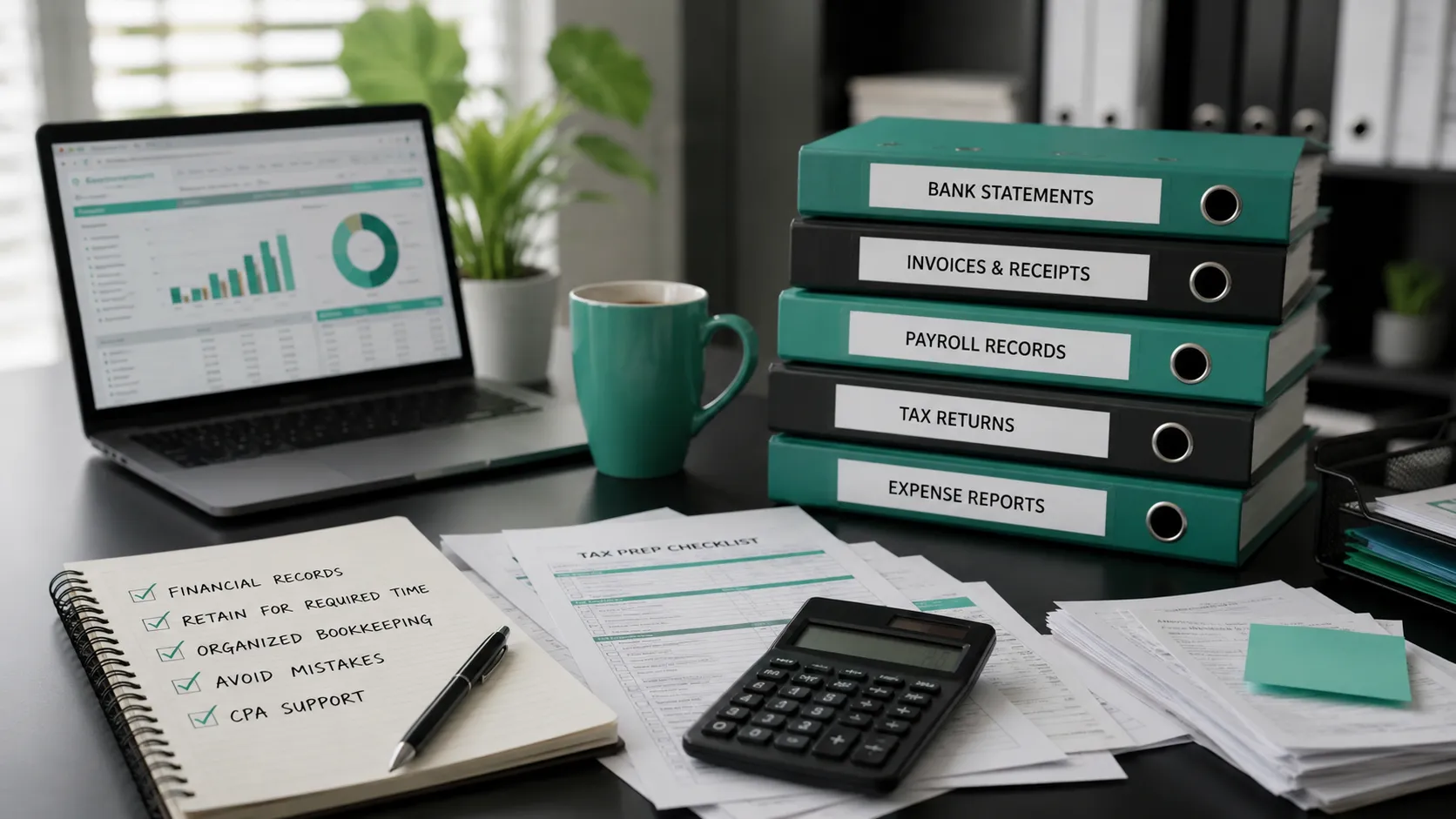
Your Business Recordkeeping Checklist
Income Records
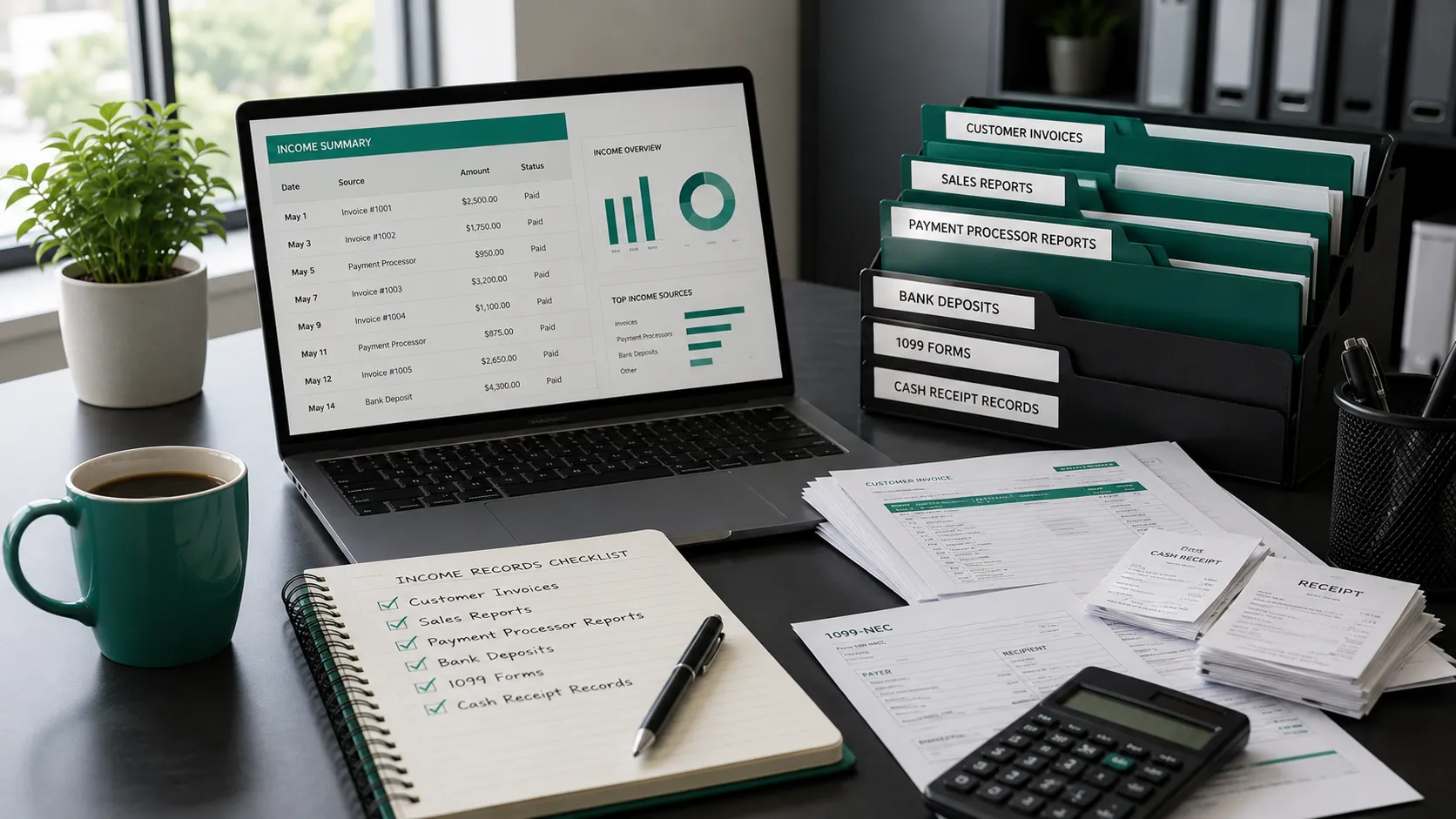
Maintain documentation for every source of business income, including:
- Customer invoices
- Sales reports
- Payment processor reports
- Bank deposits
- 1099 forms
- Cash receipt records
Accurate income reporting is the foundation of every business tax return.
Expense Documentation
Keep records supporting deductible business expenses such as:
- Office supplies
- Equipment purchases
- Software subscriptions
- Marketing and advertising
- Professional services
- Utilities
- Insurance
- Business travel
- Vehicle expenses
- Continuing education
Whenever possible, retain receipts and invoices rather than relying solely on credit card statements.

Payroll Records
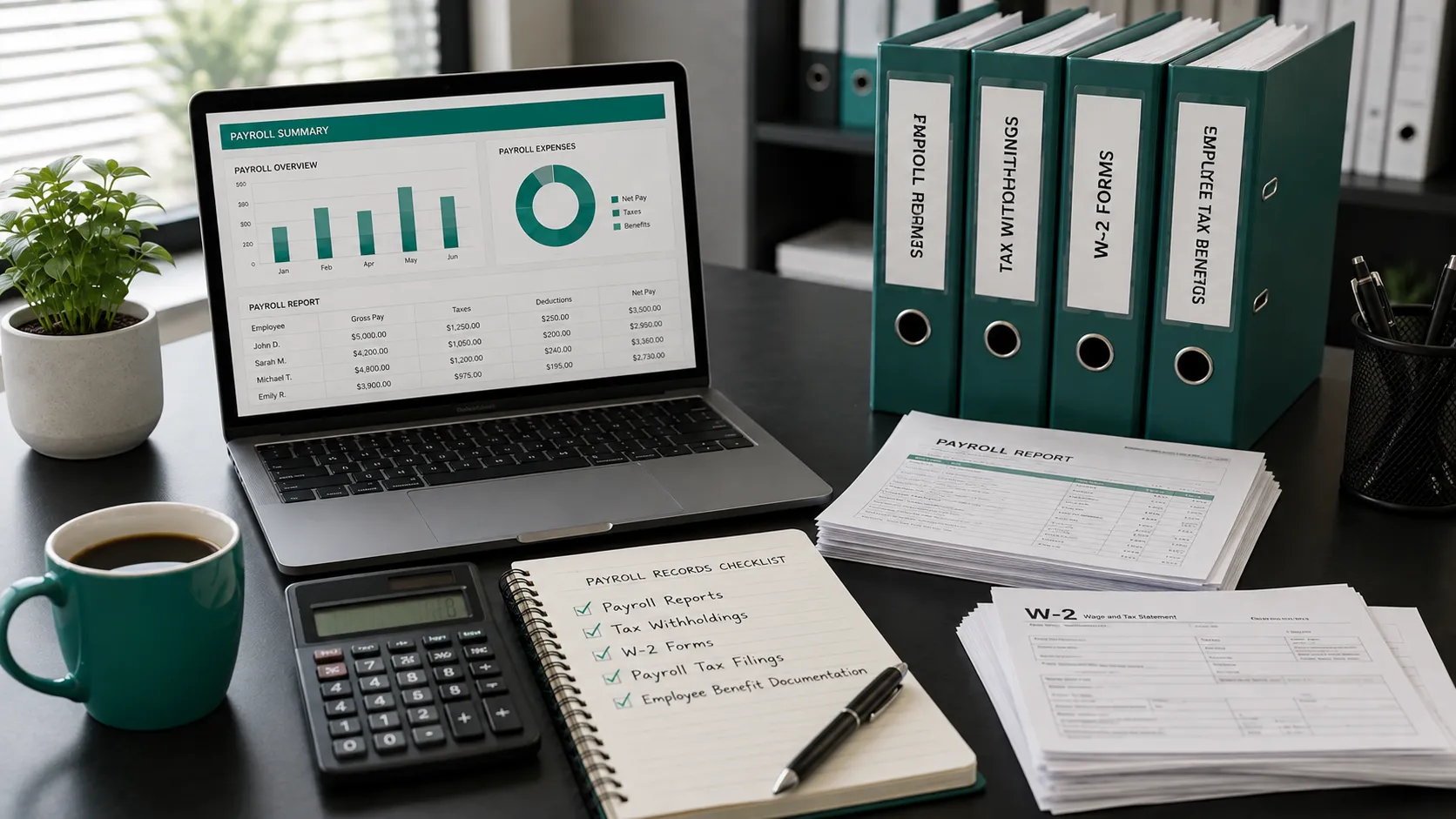
If you have employees, maintain organized records for:
- Payroll reports
- Tax withholdings
- W-2 forms
- Payroll tax filings
- Employee benefit documentation
Payroll documentation is often among the most important records businesses maintain.
Bank and Credit Card Statements
Monthly statements provide an excellent way to verify income and expenses recorded in your accounting system.
Regular reconciliation helps identify errors before they become larger bookkeeping problems.

Asset Purchases
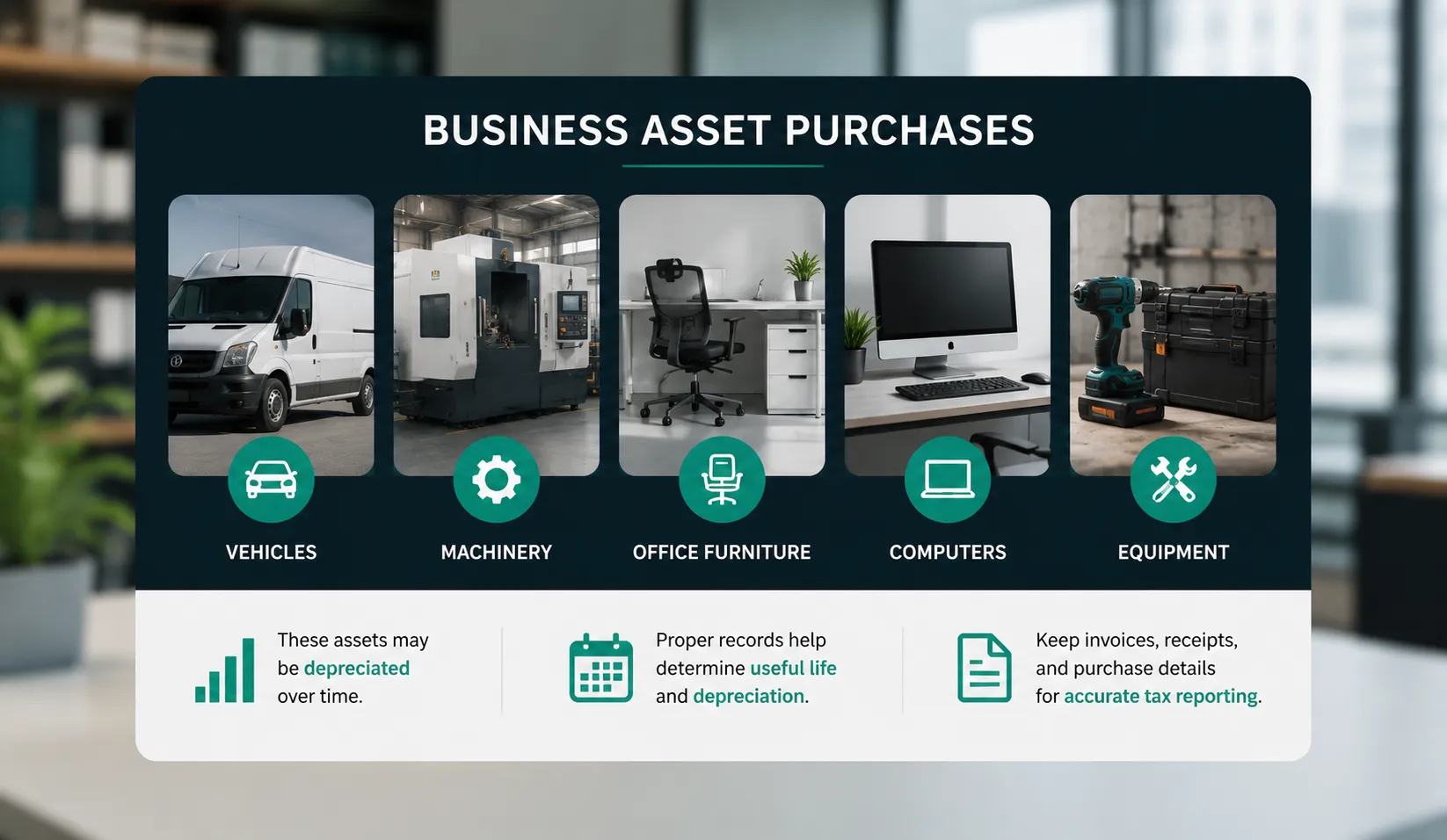
Maintain documentation for larger business purchases such as:
- Vehicles
- Machinery
- Office furniture
- Computers
- Equipment
These records help determine depreciation and future tax treatment.
Business Licenses and Legal Documents
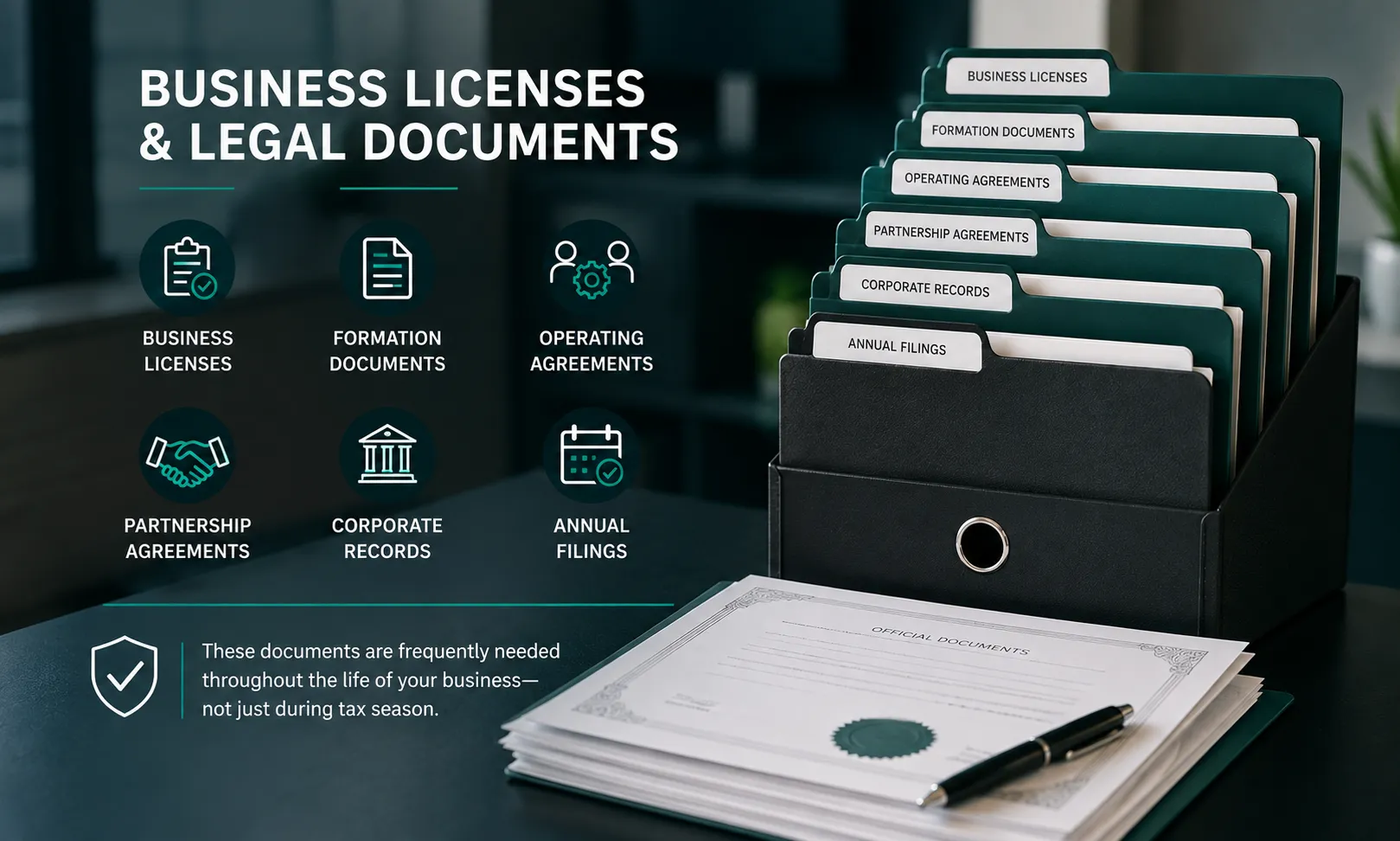
Keep copies of:
- Business licenses
- Formation documents
- Operating agreements
- Partnership agreements
- Corporate records
- Annual filings
These documents are frequently needed throughout the life of your business—not just during tax season.
Digital Records Are Easier Than Ever
Today’s accounting software makes recordkeeping significantly easier than it was just a few years ago.
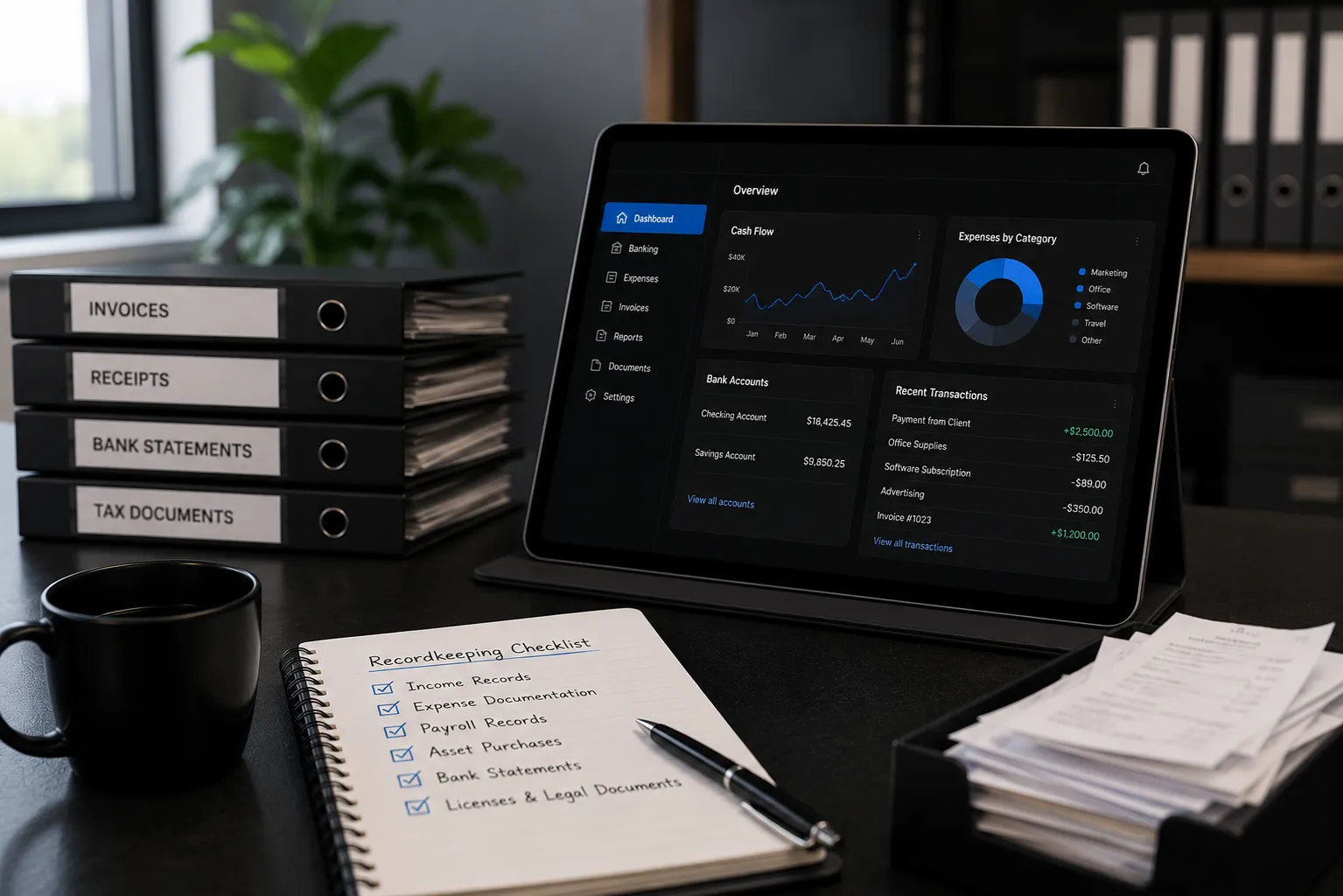
Many businesses now store records digitally using:
- Cloud accounting software
- Secure document storage
- Receipt scanning apps
- Bank integrations
Digital organization reduces paper clutter while making documents easier to locate when needed.
How Long Should You Keep Tax Records?
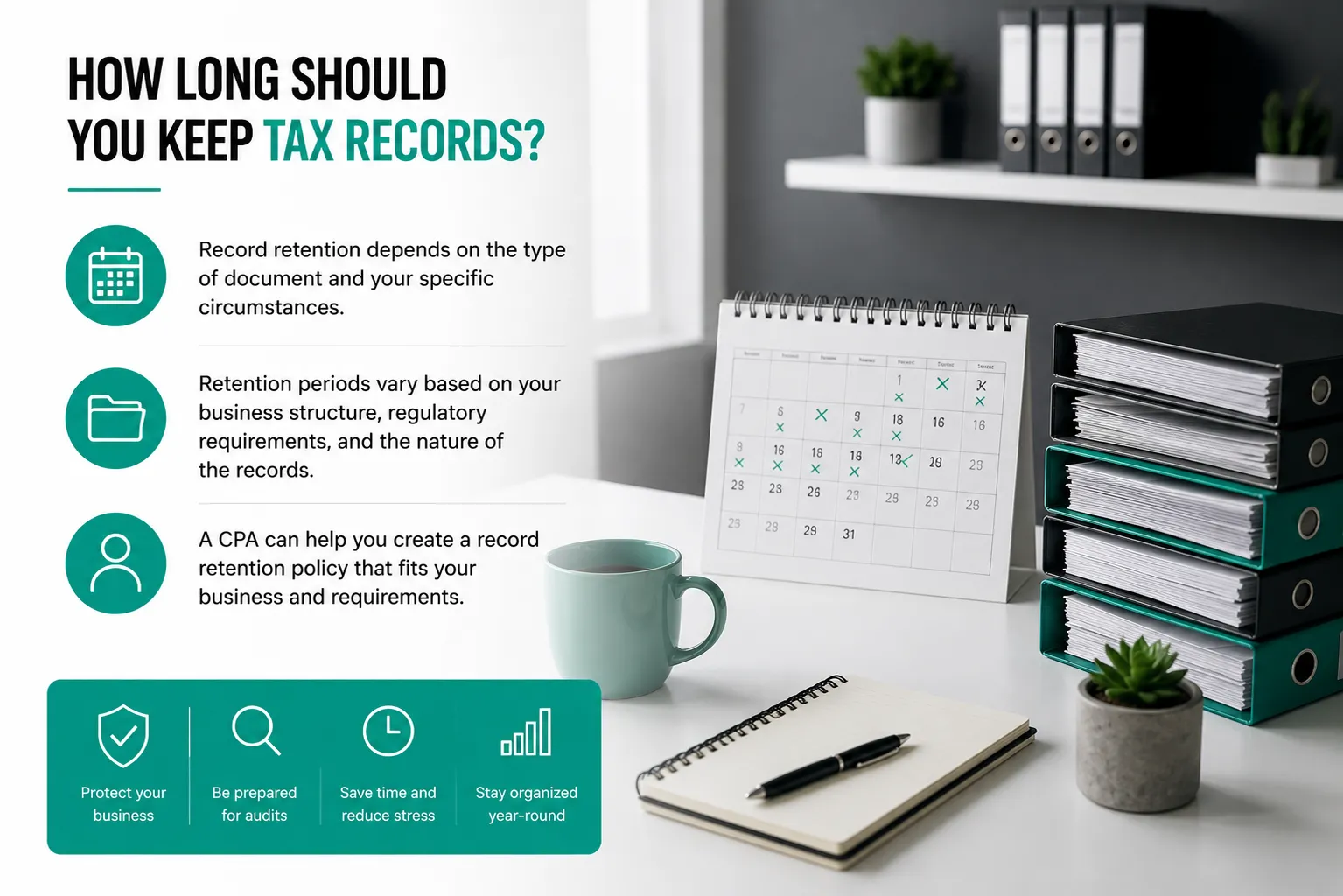
Record retention depends on the type of document and your specific circumstances.
While general guidance is available, the appropriate retention period may vary based on your business structure, regulatory requirements, and the nature of the records.
A CPA can help you develop a record retention policy that fits your business and applicable requirements.
Common Recordkeeping Mistakes
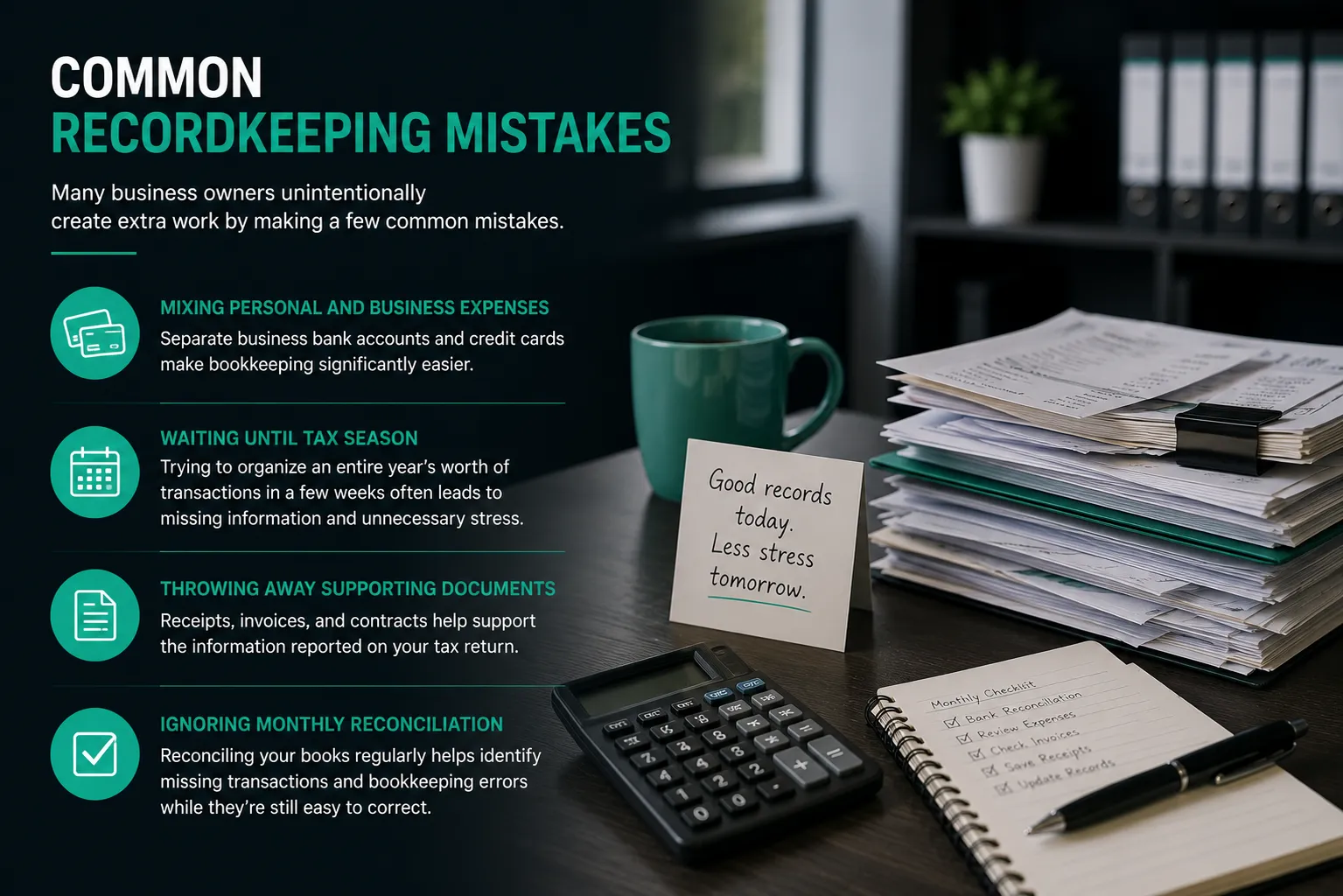
Many business owners unintentionally create extra work by making a few common mistakes.
Mixing Personal and Business Expenses
Separate business bank accounts and credit cards make bookkeeping significantly easier.
Waiting Until Tax Season
Trying to organize an entire year’s worth of transactions in a few weeks often leads to missing information and unnecessary stress.
Throwing Away Supporting Documents
Receipts, invoices, and contracts help support the information reported on your tax return.
Ignoring Monthly Reconciliation
Reconciling your books regularly helps identify missing transactions and bookkeeping errors while they’re still easy to correct.
Why Working With a CPA Saves Time
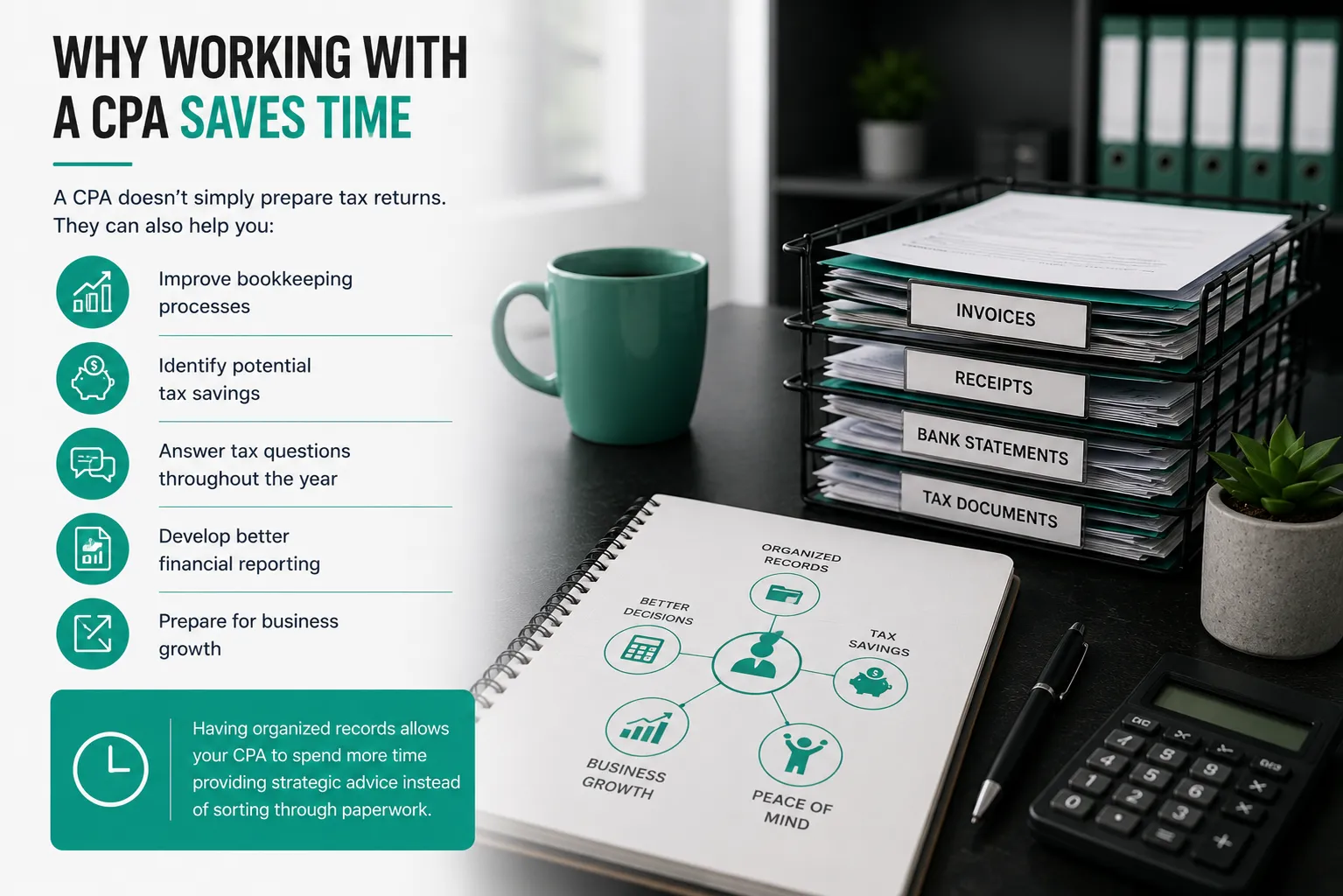
A CPA doesn’t simply prepare tax returns.
They can also help you:
- Improve bookkeeping processes
- Identify potential tax savings
- Answer tax questions throughout the year
- Develop better financial reporting
- Prepare for business growth
Having organized records allows your CPA to spend more time providing strategic advice instead of sorting through paperwork.
How Lucia & Co. Helps Business Owners Stay Organized
At Lucia & Co., we believe tax preparation starts long before tax season arrives.
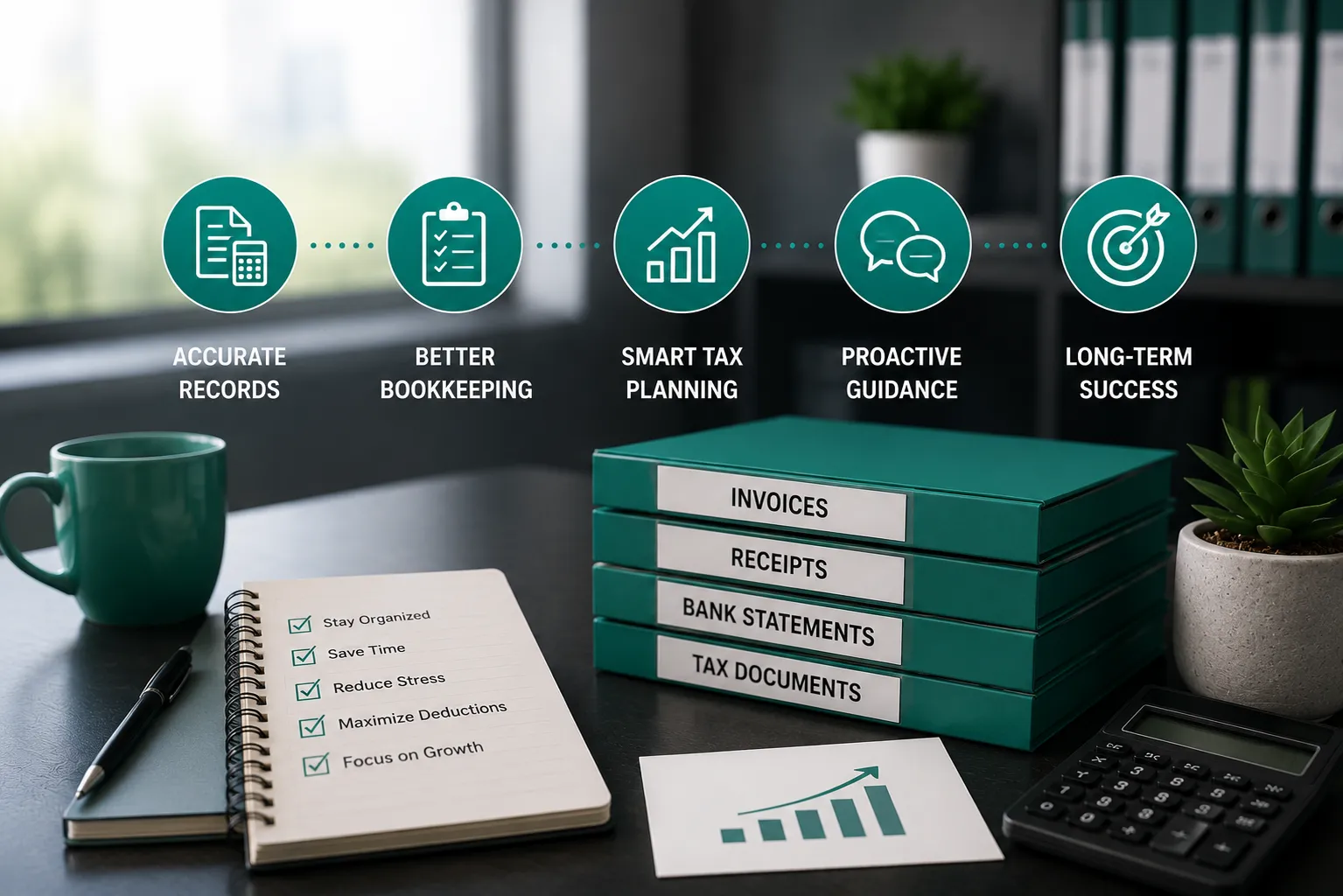
Our team works with businesses throughout the year to help maintain accurate financial records, improve bookkeeping, plan for taxes, and provide proactive guidance designed to support long-term success.
Whether you need bookkeeping assistance, business tax preparation, or year-round accounting support, staying organized today can make tax season significantly less stressful tomorrow.
Learn more about Lucia & Co. by visiting:
Conclusion
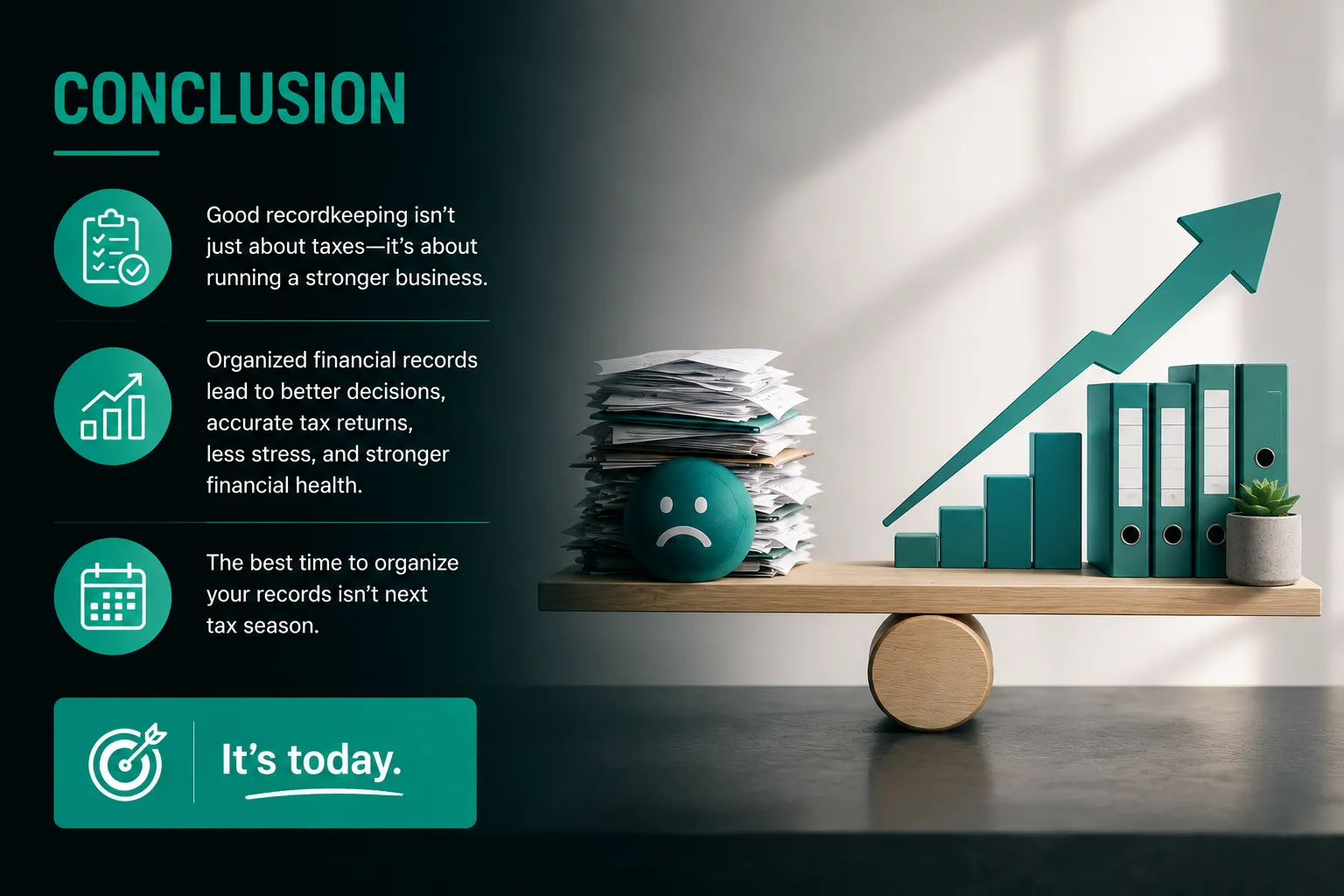
Good recordkeeping isn’t just about taxes—it’s about running a stronger business.
When your financial records are organized, you make better decisions, prepare accurate tax returns, reduce stress, and gain greater confidence in your company’s financial health.
The best time to organize your records isn’t next tax season.
It’s today.
FAQ
1. Why is recordkeeping important for small businesses?
Accurate records support tax preparation, financial planning, and business decision-making.
2. What financial records should every business keep?
Income records, expense receipts, bank statements, payroll records, invoices, and legal documents are among the most important.
3. Should I keep paper receipts?
Digital copies are often acceptable in many situations, but always maintain complete and legible records and consult your CPA regarding best practices.
4. How often should I update my bookkeeping?
Most businesses benefit from updating their books at least monthly.
5. Should I separate business and personal expenses?
Yes. Separate accounts simplify bookkeeping and reduce confusion.
6. Why should I reconcile my bank accounts?
Regular reconciliation helps identify errors and ensures your financial records remain accurate.
7. What records should I keep for payroll?
Payroll reports, tax filings, employee records, and benefit documentation should all be maintained.
8. Do I need to save invoices?
Yes. Invoices help document both income and business expenses.
9. Is accounting software necessary?
While not required, accounting software often makes recordkeeping more efficient and accurate.
10. What happens if I lose important tax records?
Missing documentation can make tax preparation more difficult and may affect your ability to support deductions.
11. How can cloud storage help?
Cloud storage makes records easier to organize, access, and protect from loss.
12. Why are receipts important?
Receipts provide supporting documentation for many business expenses.
13. Should I keep vehicle expense records?
Yes. Documentation is important for business vehicle deductions.
14. Why shouldn’t I wait until tax season?
Year-round organization reduces stress and helps identify bookkeeping issues earlier.
15. Can a CPA help improve my bookkeeping?
Absolutely. A CPA can recommend systems and processes that improve financial organization.
16. Should I save canceled checks?
Depending on the transaction, canceled checks may provide useful supporting documentation.
17. What legal documents should businesses retain?
Formation documents, licenses, operating agreements, contracts, and corporate records should all be maintained.
18. Why is bookkeeping important beyond taxes?
Accurate bookkeeping supports budgeting, forecasting, financing, and business growth.
19. What’s the biggest recordkeeping mistake?
Waiting until tax season to organize an entire year’s worth of financial information.
20. How can Lucia & Co. help my business?
Lucia & Co. provides bookkeeping, tax preparation, accounting, and advisory services to help businesses stay organized and make informed financial decisions.
