
Introduction
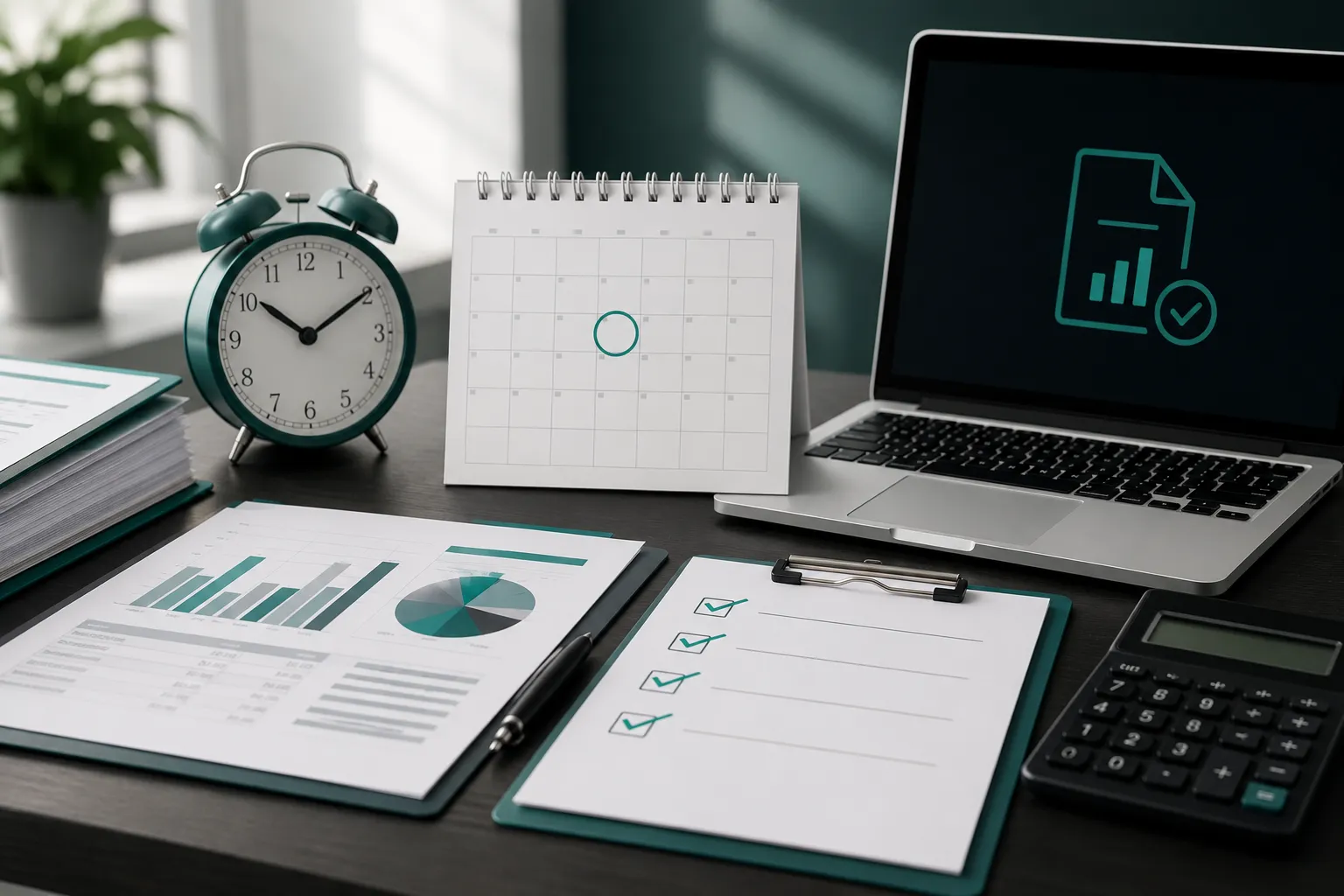
As corporate tax deadlines approach, many business owners find themselves scrambling to gather financial records, reconcile accounts, and answer questions they wish they had addressed months earlier.
Whether your business is a C corporation, S corporation, LLC taxed as a corporation, or another type of business entity, filing an accurate and timely tax return is an important part of protecting your business and avoiding unnecessary penalties.
Unfortunately, many companies wait until the last minute to organize their books, locate missing documentation, or review potential tax-saving opportunities. That approach can increase stress, create unnecessary delays, and sometimes result in costly mistakes.
The good news is that a little preparation can go a long way.
In this guide, we’ll discuss what business owners should do before filing their corporate tax return, common mistakes to avoid, and why working with a CPA throughout the year—not just during tax season—can provide long-term value.
What You’ll Learn
- What information businesses should gather before filing
- Common corporate tax filing mistakes
- Why accurate bookkeeping matters
- How year-round tax planning differs from tax preparation
- When it’s time to consult a CPA
Why Preparing Early Matters
Waiting until the filing deadline approaches often creates unnecessary pressure.
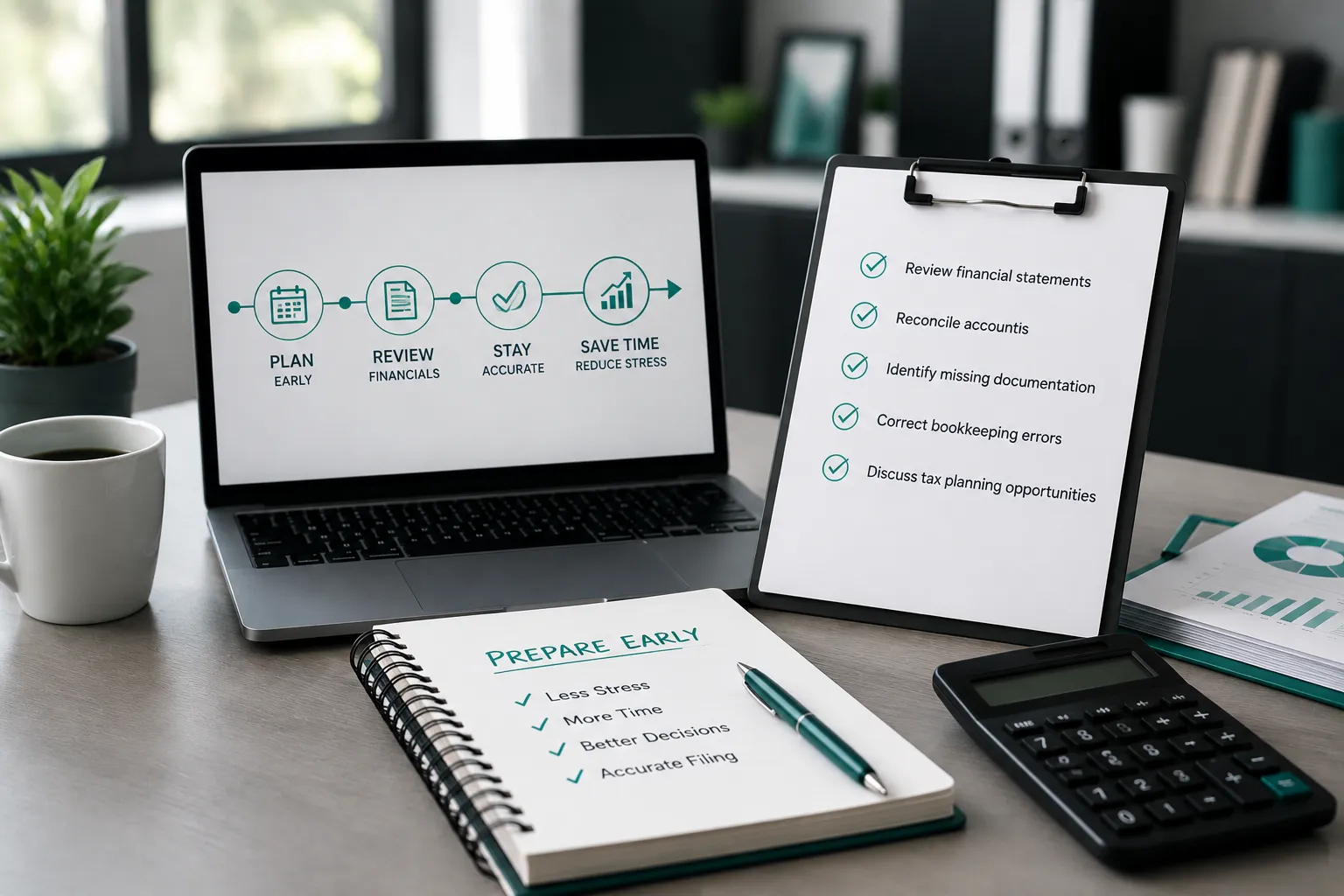
Preparing early gives business owners time to:
- Review financial statements
- Reconcile bank and credit card accounts
- Identify missing documentation
- Correct bookkeeping errors
- Discuss tax planning opportunities with their CPA
It also reduces the likelihood of filing an incomplete or inaccurate return.
According to the Internal Revenue Service, maintaining accurate books and records is essential for preparing complete and accurate tax returns.
Learn more:
https://www.irs.gov/businesses/small-businesses-self-employed/recordkeeping
1. Make Sure Your Bookkeeping Is Current
Your tax return is only as accurate as your financial records.
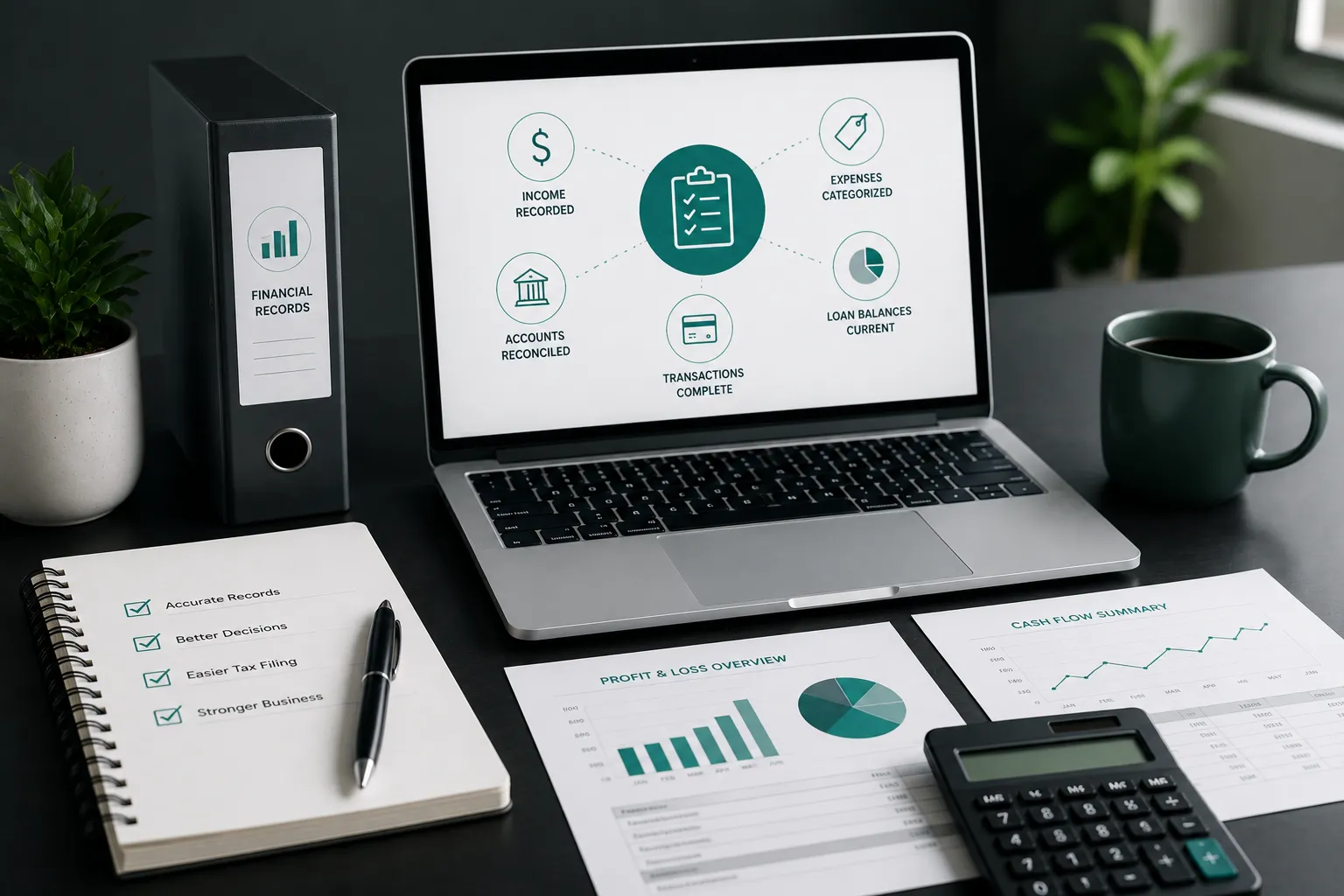
Before filing, verify that your:
- Income has been recorded correctly
- Expenses have been categorized properly
- Bank accounts are reconciled
- Credit card transactions are complete
- Loan balances are current
Clean financial records not only simplify tax preparation but also provide valuable insight into your business’s overall financial health.
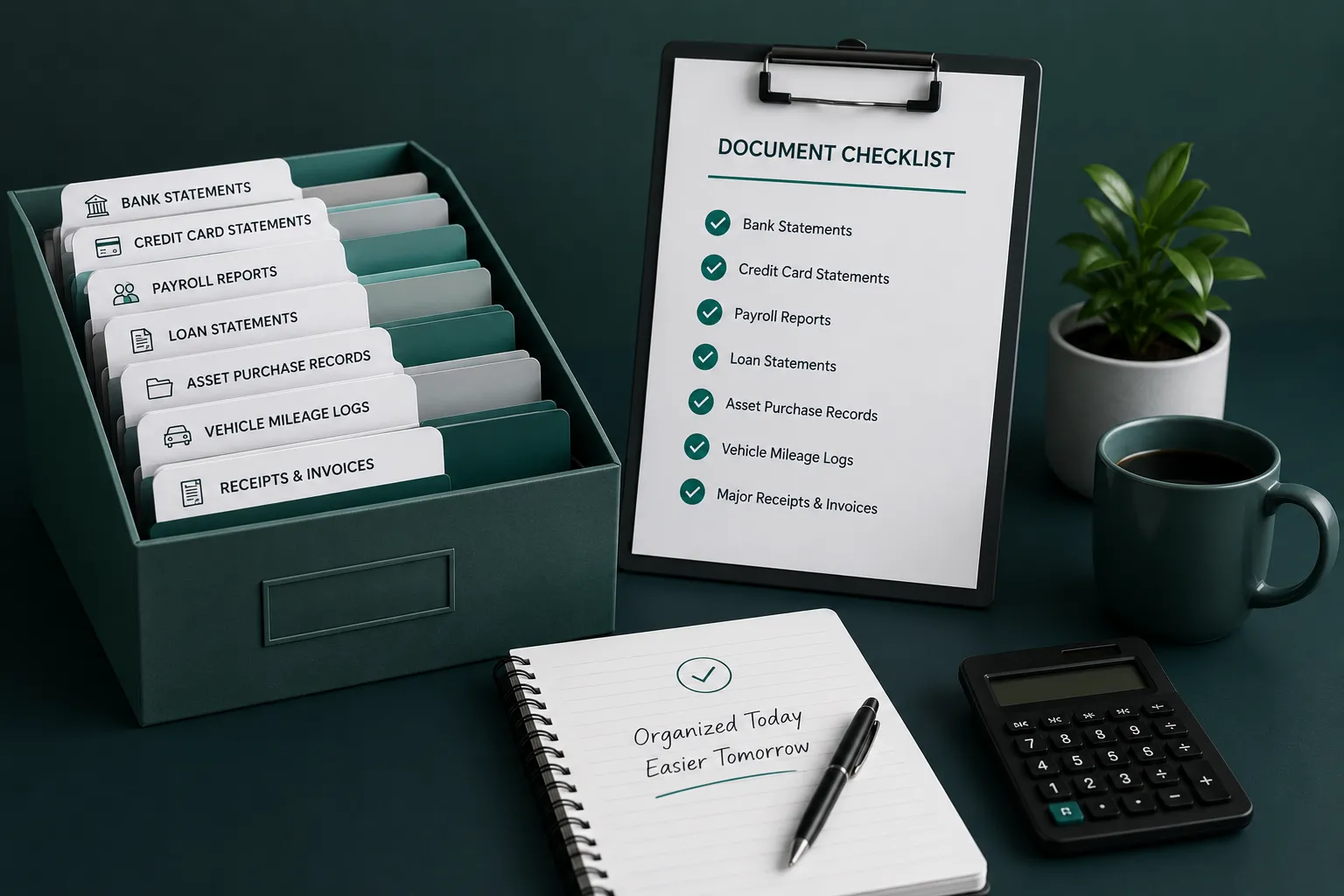
2. Gather Supporting Documentation
Having complete documentation before tax preparation begins can help reduce delays.
Examples include:
- Bank statements
- Credit card statements
- Payroll reports
- Loan statements
- Asset purchase records
- Vehicle mileage logs
- Major receipts and invoices
Keeping these records organized throughout the year makes tax season significantly easier.
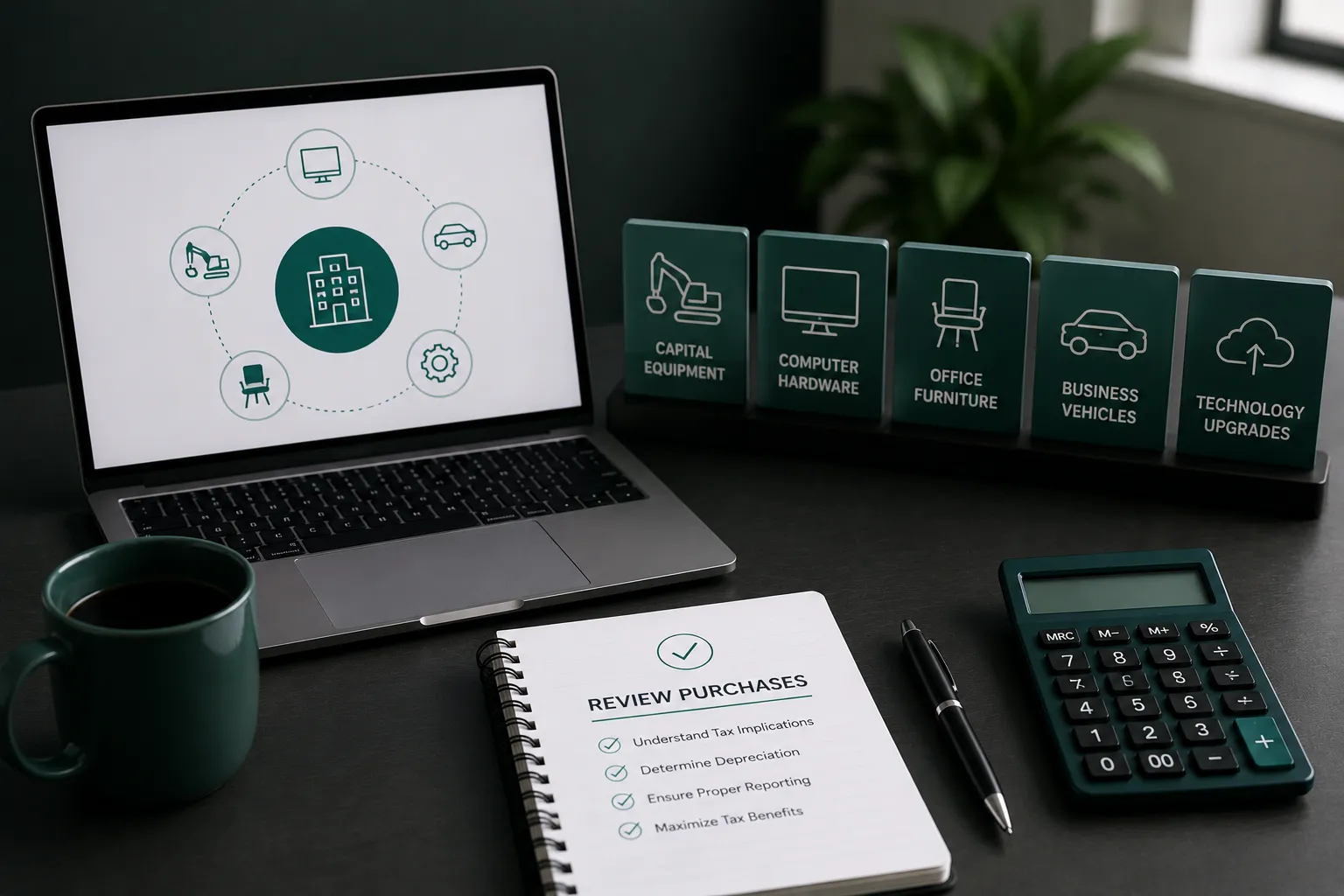
3. Review Major Business Purchases
Equipment purchases, software investments, vehicles, and other business assets may have tax implications.
Before filing, review:
- Capital equipment purchases
- Computer hardware
- Office furniture
- Business vehicles
- Technology upgrades
Your CPA can determine how these purchases should be reported and whether depreciation or other tax treatments apply.
4. Confirm Payroll and Contractor Information
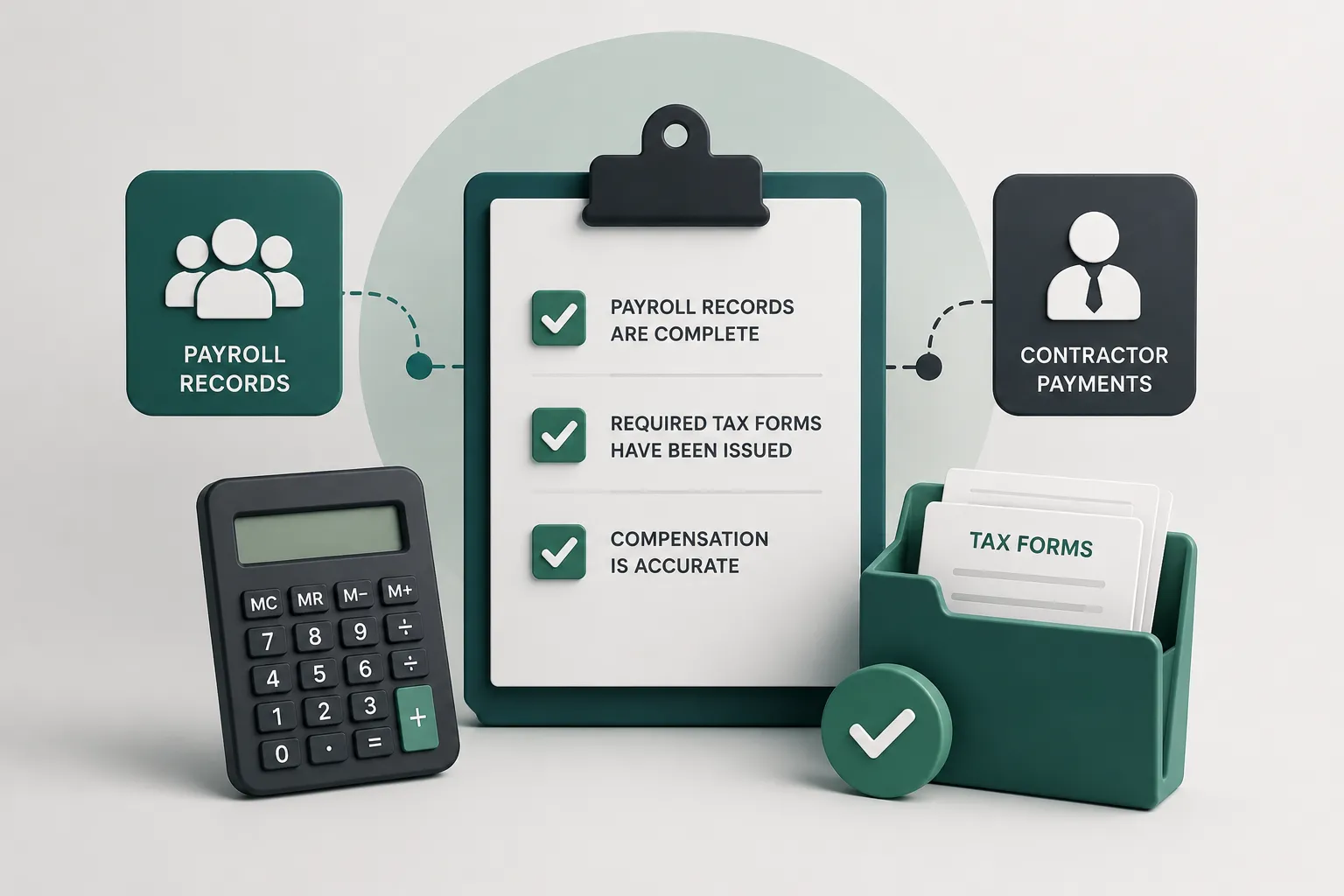
Employee wages and payments to independent contractors should be reviewed carefully.
Errors involving payroll reporting or contractor documentation can create unnecessary complications.
Before filing, confirm that:
- Payroll records are complete
- Required tax forms have been issued
- Compensation has been recorded accurately
Accurate payroll reporting is an important part of maintaining compliance.
5. Don’t Overlook Available Deductions
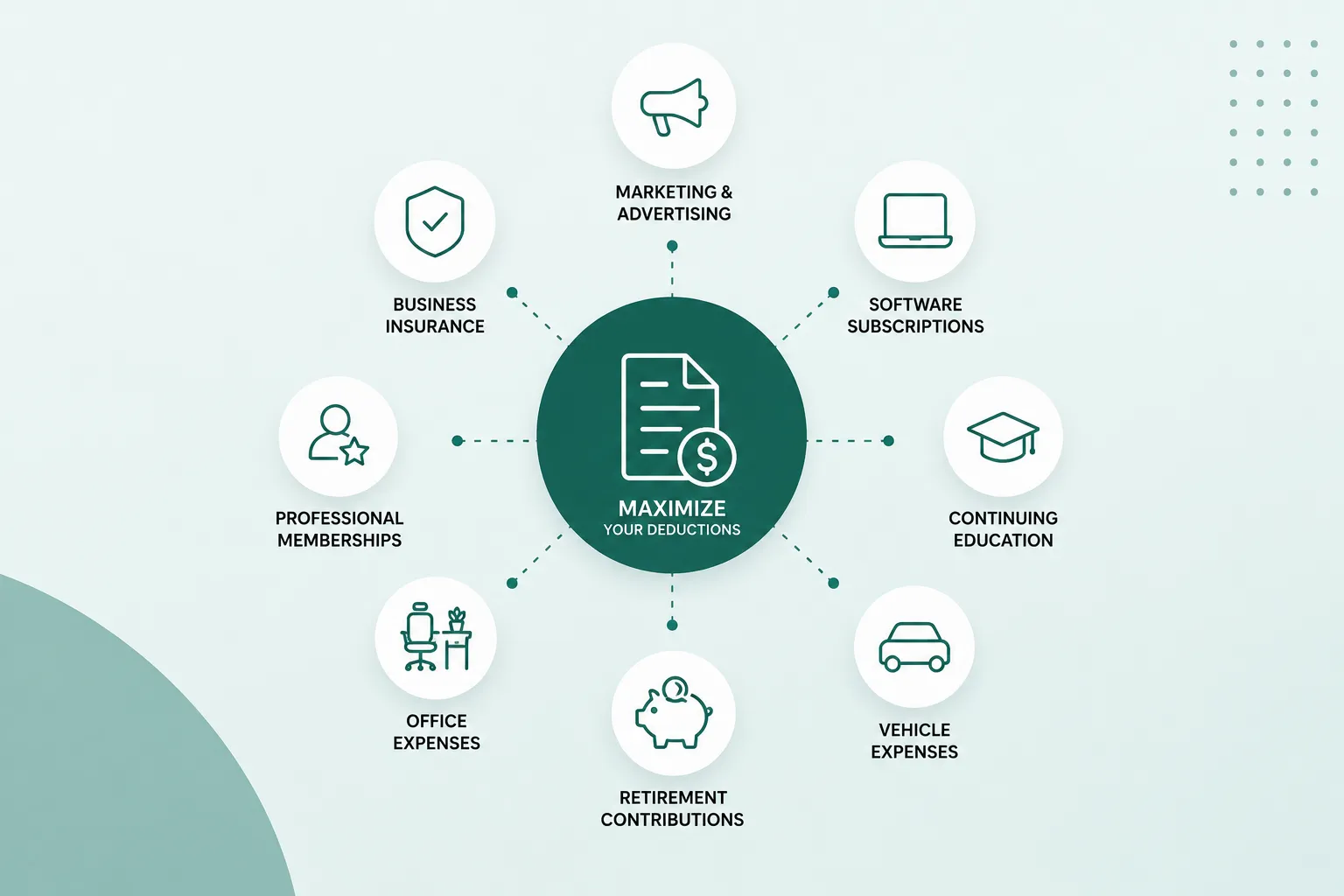
One of the most common mistakes business owners make is overlooking legitimate deductions.
Depending on your business, deductible expenses may include:
- Marketing and advertising
- Software subscriptions
- Professional memberships
- Business insurance
- Office expenses
- Continuing education
- Vehicle expenses
- Retirement contributions
Reviewing these expenses before filing can help ensure they are properly documented and reported.
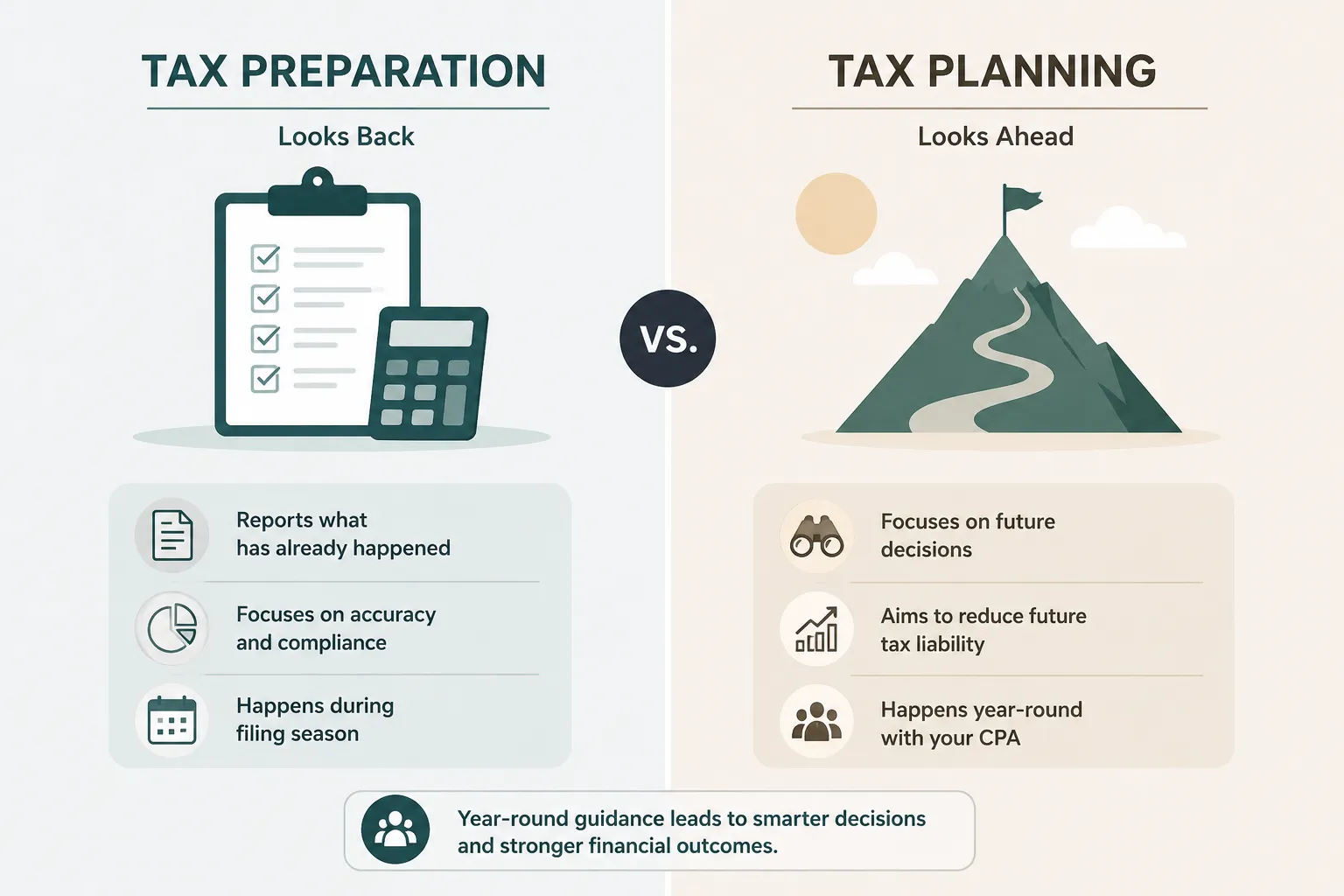
6. Understand the Difference Between Tax Preparation and Tax Planning
Many people use the terms interchangeably, but they are very different.
Tax preparation focuses on accurately reporting what has already happened.
Tax planning focuses on making proactive decisions that may reduce future tax liability.
By the time you’re preparing a return, many planning opportunities have already passed.
That’s why successful businesses often work with their CPA throughout the year—not just during filing season.
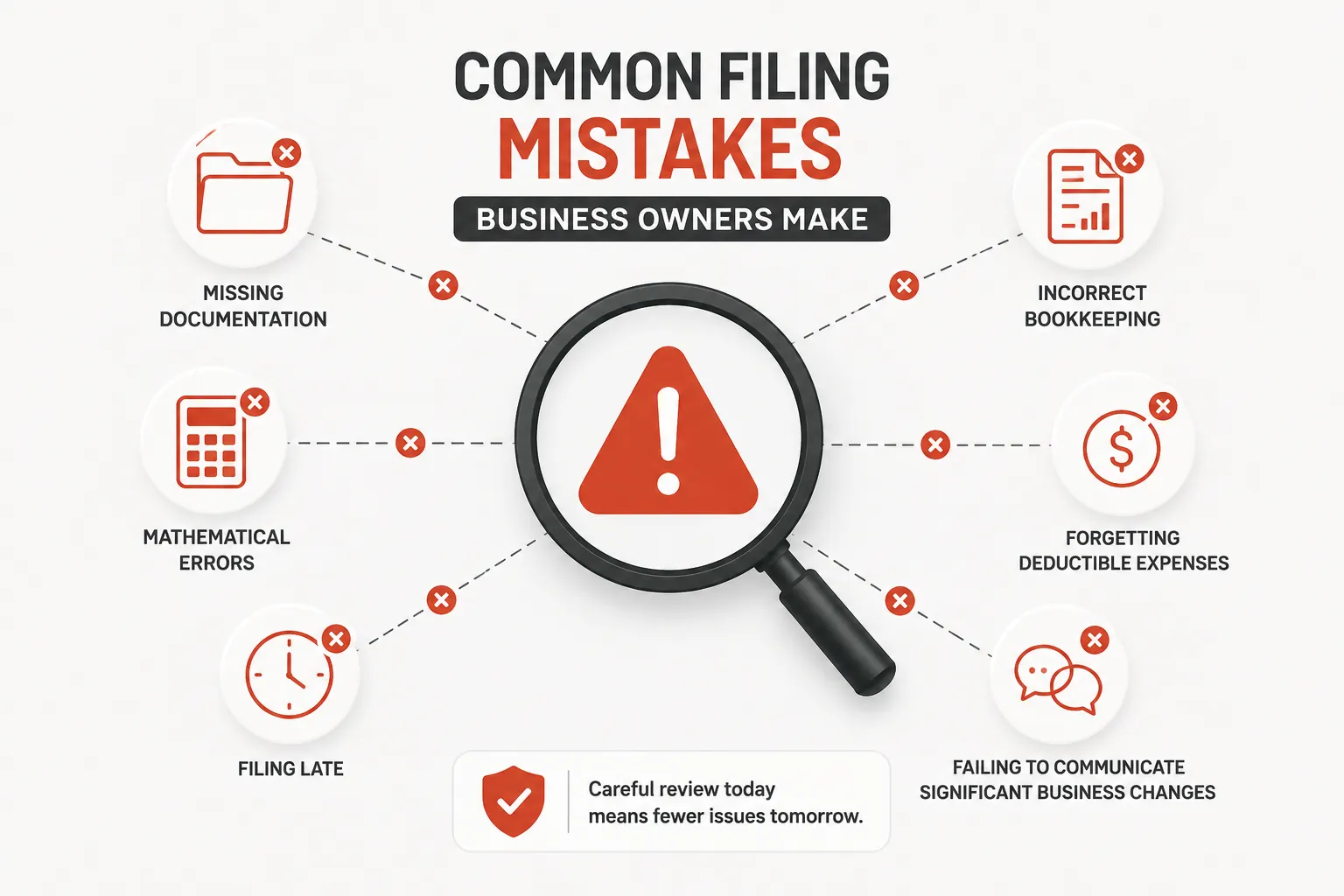
Common Filing Mistakes Business Owners Make
As deadlines approach, businesses sometimes rush through the filing process.
Common mistakes include:
- Missing documentation
- Incorrect bookkeeping
- Mathematical errors
- Forgetting deductible expenses
- Filing late
- Failing to communicate significant business changes
Taking the time to review your records carefully can help reduce these risks.
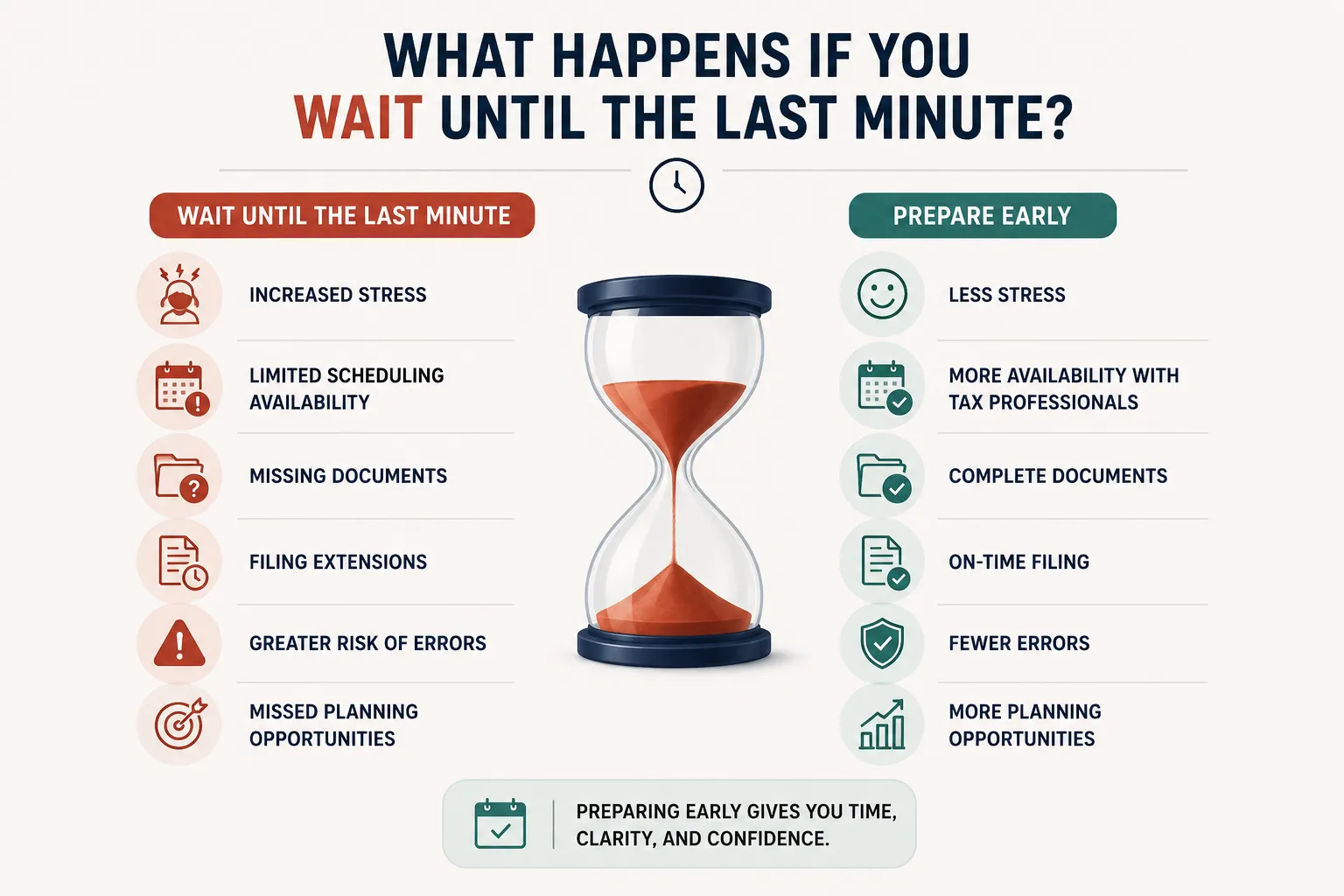
What Happens If You Wait Until the Last Minute?
Waiting until the deadline can result in:
- Increased stress
- Limited scheduling availability with tax professionals
- Missing documents
- Filing extensions
- Greater risk of errors
- Missed planning opportunities
Preparing early provides more flexibility and allows time to resolve questions before returns are due.
How a CPA Can Help Beyond Tax Season
Many business owners think of their CPA as someone who prepares tax returns.
In reality, a CPA can also provide guidance throughout the year by helping businesses:
- Evaluate financial performance
- Improve bookkeeping processes
- Plan for estimated taxes
- Identify tax-saving opportunities
- Support business growth decisions
- Maintain compliance with changing tax regulations
A proactive relationship often delivers significantly more value than a once-a-year meeting.

Corporate Tax Preparation and Planning
Every business has unique financial circumstances.
The right tax strategy depends on your entity type, revenue, expenses, long-term goals, and growth plans.
Working with an experienced CPA can help ensure your tax return is accurate while also identifying opportunities that support future financial success.
To learn more about corporate tax preparation and advisory services, visit:

Conclusion
Corporate tax deadlines don’t have to be stressful.
With organized financial records, accurate bookkeeping, and proactive planning, business owners can approach tax season with greater confidence and fewer surprises.
If you’re preparing your business tax return, now is an excellent time to review your financial records, gather supporting documentation, and consult with a trusted CPA to ensure your business is positioned for both compliance and long-term success.
FAQ: Corporate Tax Filing
1. When are corporate tax returns due?
The filing deadline depends on your business entity and whether an extension has been filed. A CPA can help determine the correct deadline for your business.
2. What records do I need before filing?
Bank statements, financial reports, payroll records, receipts, invoices, and supporting documentation are commonly required.
3. What happens if my bookkeeping isn’t complete?
Incomplete bookkeeping can delay filing and increase the likelihood of errors.
4. Can I still reduce my taxes right before filing?
Some opportunities may still exist, but many tax-saving strategies must be implemented before the tax year ends.
5. What’s the difference between tax planning and tax preparation?
Tax preparation reports past activity, while tax planning focuses on future strategies to reduce tax liability.
6. Should I meet with my CPA before tax season?
Yes. Year-round planning often provides greater value than waiting until filing season.
7. What expenses are commonly deductible?
Marketing, software, insurance, office expenses, professional fees, and other ordinary and necessary business expenses may qualify.
8. Why is bookkeeping important for taxes?
Accurate bookkeeping provides the foundation for complete and accurate tax returns.
9. Should I keep receipts for business purchases?
Yes. Supporting documentation is important for substantiating deductions.
10. What if I miss a filing deadline?
Late filing may result in penalties and interest depending on your circumstances.
11. Should I reconcile my bank accounts before filing?
Absolutely. Reconciliations help identify errors and missing transactions.
12. Can my CPA help with estimated taxes?
Yes. Estimated tax planning is an important part of year-round financial management.
13. Why should I review equipment purchases?
Certain business assets may qualify for depreciation or other tax treatment.
14. Can my CPA help improve my bookkeeping?
Many CPAs provide guidance to improve accounting processes and financial reporting.
15. Is it better to file early?
Preparing early often reduces stress and provides time to resolve questions before deadlines.
16. Do corporations and LLCs have the same filing requirements?
Not always. Filing requirements depend on how the business is organized and taxed.
17. How long should I keep business tax records?
The IRS recommends retaining records for appropriate periods based on the type of document and tax situation.
18. Can a CPA help my business beyond taxes?
Yes. Many provide advisory, financial planning, and business consulting services throughout the year.
19. What is the biggest mistake businesses make during tax season?
Waiting until the last minute to organize records and communicate with their CPA.
20. Where can I learn more about corporate tax services?
Visit https://www.luciacpa.com/ to learn more about business tax preparation, planning, and advisory services.
