What to Do After Tax Season: A Smart Game Plan for Next Year
(And How to Make Filing Way Easier Next Time)
Tax season just wrapped up—and whether you’re feeling relieved, frustrated, or confused, now is actually the best time to make next year easier.
Most people wait until January to think about taxes again. That’s exactly why tax season feels stressful every year.
Instead, take 30–60 minutes now and set yourself up so next year is smooth, predictable, and maybe even a little boring (in a good way).
First—Look Back Before You Move Forward
Before you move on, take a quick review of what just happened:
Did you owe money unexpectedly?
Did you get a larg…
Why Do I Owe So Much in Taxes This Year? 9 Common Reasons (And How to Fix It)

If you opened your tax return and thought, “Why do I owe so much this year?”—you’re not alone.
For many individuals and business owners, tax season brings unexpected surprises. One year you receive a refund, and the next you owe thousands. It can feel confusing, frustrating, and sometimes even alarming.
The reality is that tax outcomes are rarely random. In most cases, there are specific, identifiable reasons why your tax bill increased.
In this guide, we’ll break down the most common reasons people owe more in taxes, what may have changed, and what you can do to avoid the same situation next…
S Corp vs. LLC: Choosing the Right Business Structure for Your Company
Main Takeaways:
Choosing between an S corp vs. LLC is a critical business decision that impacts taxes, compliance, ownership flexibility, and long-term growth.
LLCs offer simplicity and flexibility, providing liability protection, minimal paperwork, and fewer ownership restrictions—ideal for startups and growing businesses.
S corporations can provide significant tax savings by allowing owners to split income between salary and distributions, reducing self-employment taxes.
Reasonable salary rules are a major compliance requirement for S corps, and failing to follow them can trigger IRS audit…
Cloud Accounting for Small Businesses: Simplifying Financial Management

Main Takeaways
Cloud accounting gives small businesses real-time financial access and flexibility — Owners and accountants can log in from any device, improving efficiency and decision-making.
Automation reduces manual bookkeeping and errors — Features like automated bank feeds, invoicing, and expense tracking streamline financial tasks and save valuable time.
Cloud platforms improve collaboration — Multiple users can access up-to-date financial information simultaneously, helping teams and accountants work together effortlessly.
Security is stronger than most on-premise systems — Reputable…
Cash Flow Forecasting: How to Strengthen Business Stability and Growth

Main Takeaways:
Cash flow forecasting predicts inflows and outflows, ensuring enough funds to cover obligations.
Forecasting differs from budgeting by focusing on timing of cash movements.
Key components include sales projections, receivables, expenses, capital, financing, and taxes.
Businesses can use direct (short-term) or indirect (long-term) forecasting methods.
Technology like QuickBooks, Xero, and dedicated tools makes forecasting more accurate and efficient.
Regular updates and scenario planning help manage risks and economic uncertainty.
Partnering with accountants like Lucia & C…
What Is a Profit and Loss Report?

Main Takeaways:
A Profit & Loss (P&L) Report shows a company’s revenues, expenses, and net profit or loss over a specific period.
It’s a key tool for measuring business performance and guiding strategic decisions.
Also known as an income statement or statement of operations, it’s used across industries.
Investors, lenders, and owners use P&Ls to assess profitability, efficiency, and financial trends.
Works together with the balance sheet and cash flow statement for a complete financial picture.
Can be prepared using accrual or cash-basis methods, each offering different insights…
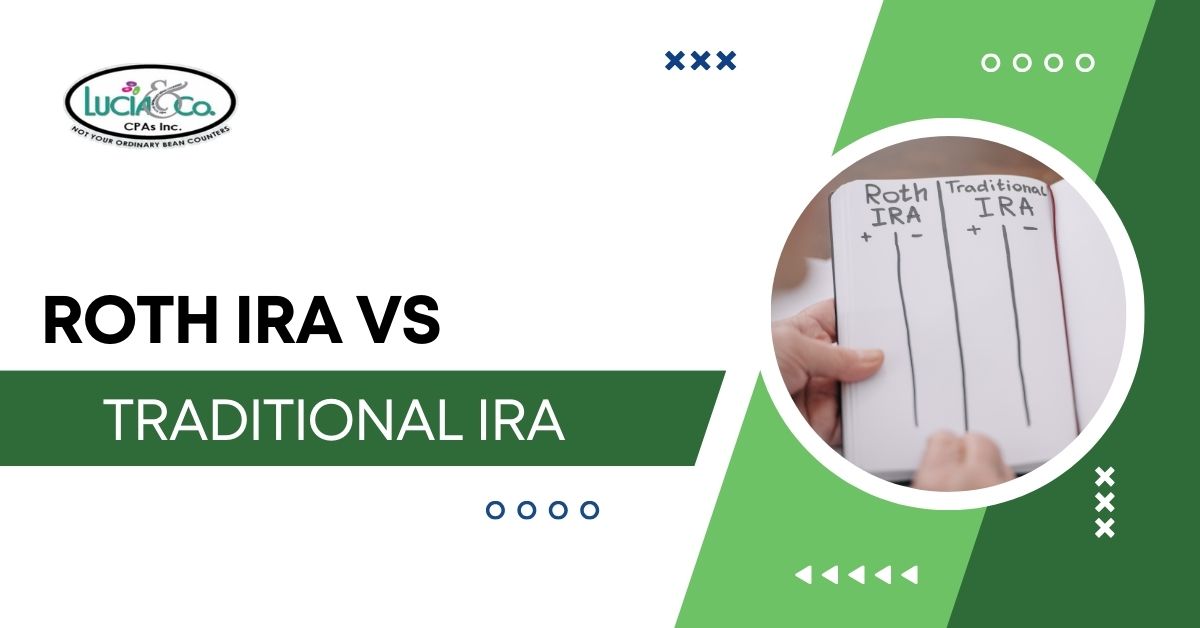
Roth IRA vs Traditional IRA: Which Retirement Account is Right for You
Main Takeaways:
Traditional IRA offers upfront tax deductions, tax-deferred growth, and taxable withdrawals in retirement.
Roth IRA uses after-tax contributions but provides tax-free growth and withdrawals.
Contribution limits for 2025: $7,000 (under 50) and $8,000 (50+), with income restrictions for Roth IRA eligibility.
Tax timing is the main difference: Traditional saves taxes now, Roth saves taxes later.
Withdrawal rules vary: Roth contributions can be withdrawn anytime; Traditional has penalties before 59½.
RMDs: Required at age 73 for Traditional IRAs, not required for Roths during the…
Accounting Business Services for Dentists

Main Takeaways:
Dental practices have unique financial needs involving medical procedures, retail sales, insurance reimbursements, and high overhead—requiring specialized accounting knowledge.
Professional bookkeeping ensures accuracy, improves cash flow tracking, and supports audit-ready records essential for sustainable operations.
Strategic tax planning minimizes liabilities through industry-specific deductions and ensures full compliance with complex healthcare-related tax laws.
Custom financial reporting and KPIs empower dentists to make data-driven decisions about growth, staffing, and…
Hospitality Accounting: Financial Strategies for Hotels, Restaurants, and Resorts

Key Takeaways:
Industry-Specific Focus: Hospitality accounting addresses the unique financial challenges of hotels, restaurants, and resorts, including fluctuating revenue, seasonal demand, and labor complexities.
Critical Financial Components: Effective hospitality accounting includes revenue segmentation, cost control, payroll and tip management, and inventory tracking to support accurate financial decisions.
Regulatory Compliance & Taxation: Specialized systems ensure compliance with occupancy and sales taxes, tip reporting, labor laws, and strategic depreciation.
Benefits of O…
